The short answer
Look for portable toys that are quiet, screen-free, low-mess, and usable without a large play surface. A discovery bottle, reusable drawing board, sticker scene, small book, and conversation game make a practical preschool travel kit.
What makes a toy work well away from home?
Use the one-hand test: can the activity stay usable while a parent is also holding a menu, bag, or younger sibling? The strongest choices keep their pieces attached or fully contained.
- Quiet enough for shared spaces
- Contained or nearly piece-free
- Easy to wipe clean
- Interesting in more than one way
- Small enough for the family bag
A five-item restaurant and travel kit
Pack fewer things with more replay value. Rotate one or two items between trips so the bag stays familiar without becoming invisible.
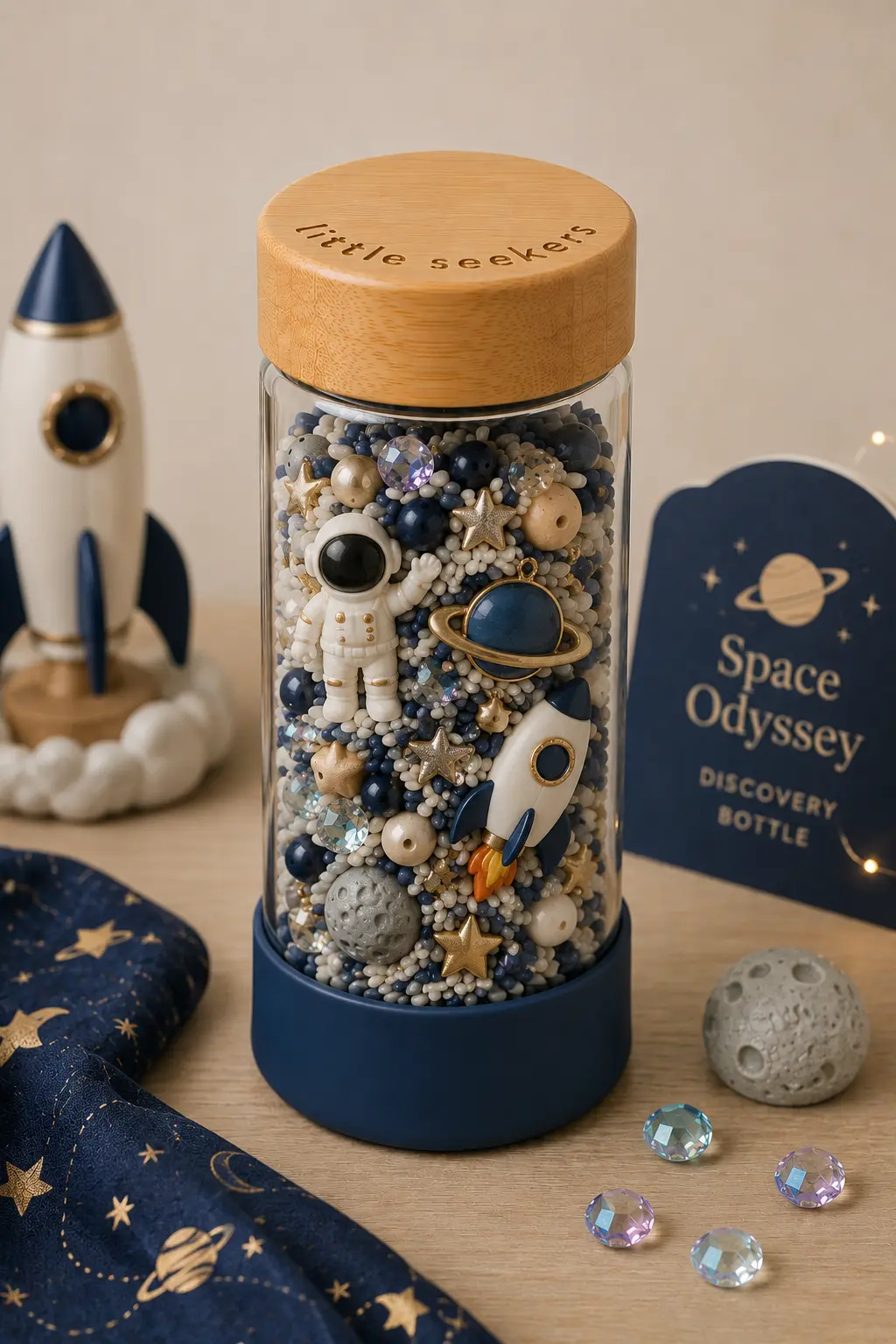
- A sealed seek-and-find discovery bottle
- A reusable drawing tablet or water-reveal card
- A small reusable sticker scene
- One favorite paperback or seek-and-find book
- Two conversation games, such as Would You Rather and Guess My Object
How to make one toy last longer
Change the invitation instead of changing the toy. With a discovery bottle, one round can be I Spy, the next can be counting, and the next can be a story. A prompt card or a parent’s simple question creates novelty without adding pieces.
For restaurants: wait before opening the bag
Let your child settle, look at the menu, and join the conversation first. Bring out one activity when it is needed rather than placing the entire kit on the table at once. Saving a second option for the final wait can make the bag work harder.
For road trips and flights: alternate the kind of attention
Move between listening, looking, talking, and resting. For example: audio story, discovery bottle, snack, window game, then quiet music. The rhythm matters more than having a dozen new toys.
Every child is different. Choose activities that fit your child’s age and abilities, supervise play, and follow each product’s care and safety guidance.