The short answer
Reliable screen-free quiet-time activities are simple, repeatable, and easy to manage alone: seek-and-find bottles, audiobooks with a small manipulative, reusable stickers, picture books, puzzles, drawing prompts, and themed quiet-time baskets.
1. Pair an audiobook with something for the hands
Some children listen longer when their hands are gently occupied. Try an audio story with a discovery bottle, a few large building pieces, or paper and crayons.
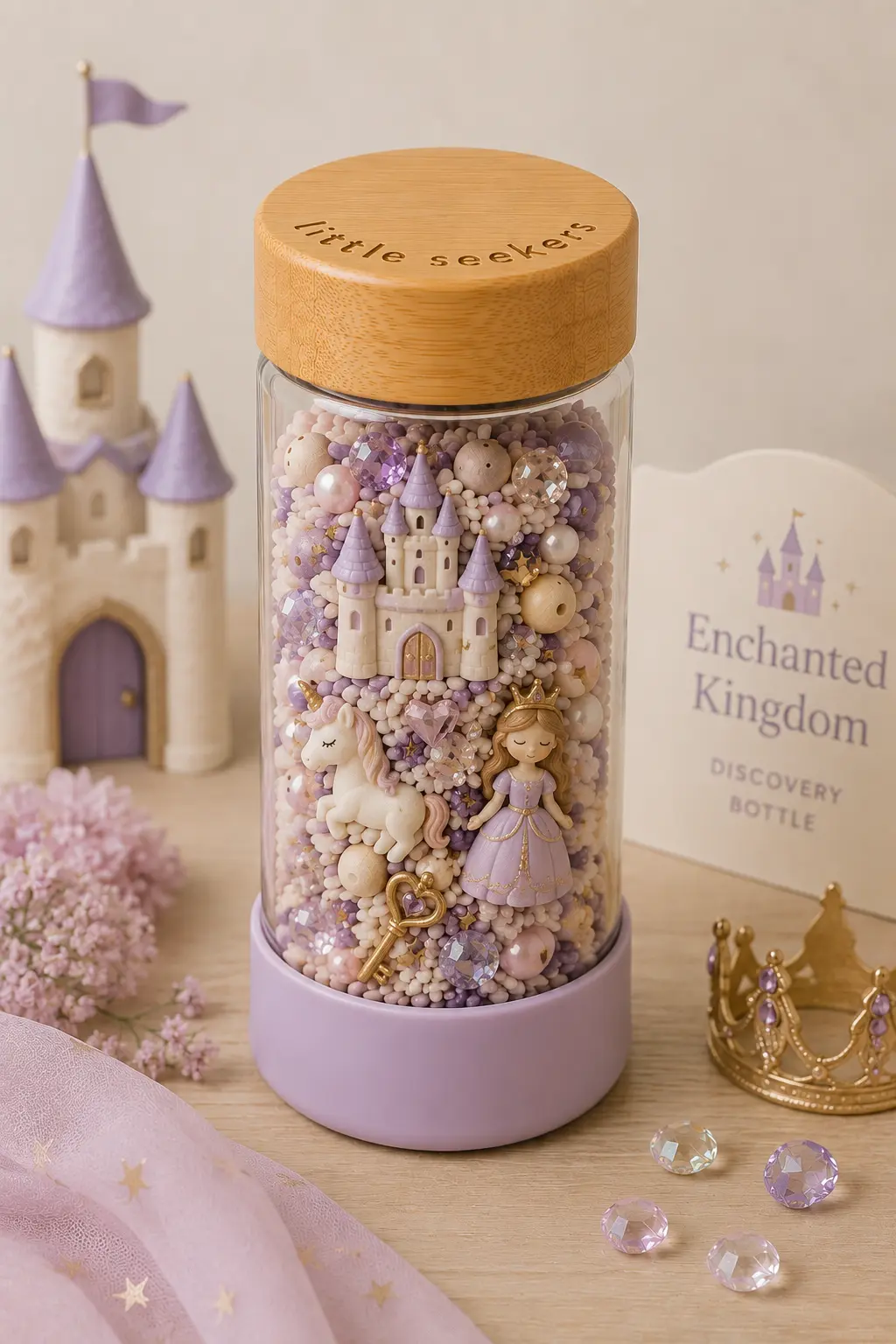
2. Offer an I Spy discovery bottle
Give one clear prompt: ‘Can you find the tiny key?’ When it appears, your child can choose another object, count a category, or build a story around the treasure.
3. Rotate a small basket of picture books
Three books can feel more inviting than an entire shelf. Mix one familiar favorite, one wordless picture book, and one nonfiction book connected to a current interest.
4. Keep a reusable scene ready
A reusable sticker or magnetic scene offers a beginning without deciding the whole story. Store every piece in one pouch so setup and cleanup stay manageable.
5. Make a tiny invitation to draw
Instead of ‘draw a picture,’ offer a starting point: design a new planet, draw what might live inside a castle, or invent a friendly dinosaur. Specific prompts reduce the work of getting started.
6. Choose one just-right puzzle
A puzzle that is familiar or slightly challenging can hold attention without requiring constant help. Save brand-new or especially tricky puzzles for together time.
7. Create a weekly quiet-time basket
Choose only three or four activities and rotate one item each week. Familiarity helps independent play; a small change restores curiosity without creating a completely new routine.
How long should preschool quiet time be?
There is no universal target. Start with a short stretch your child can complete successfully, then build gradually. A predictable cue—same place, same opening book, same calm phrase—often matters more than the exact number of minutes.
Every child is different. Choose activities that fit your child’s age and abilities, supervise play, and follow each product’s care and safety guidance.