The short answer
The easiest mess-free sensory activities use one contained material at a time: discovery bottles, reusable sticker scenes, water-painting cards, texture hunts, sound matching, play scarves, and simple movement prompts.
1. Try a sealed seek-and-find bottle
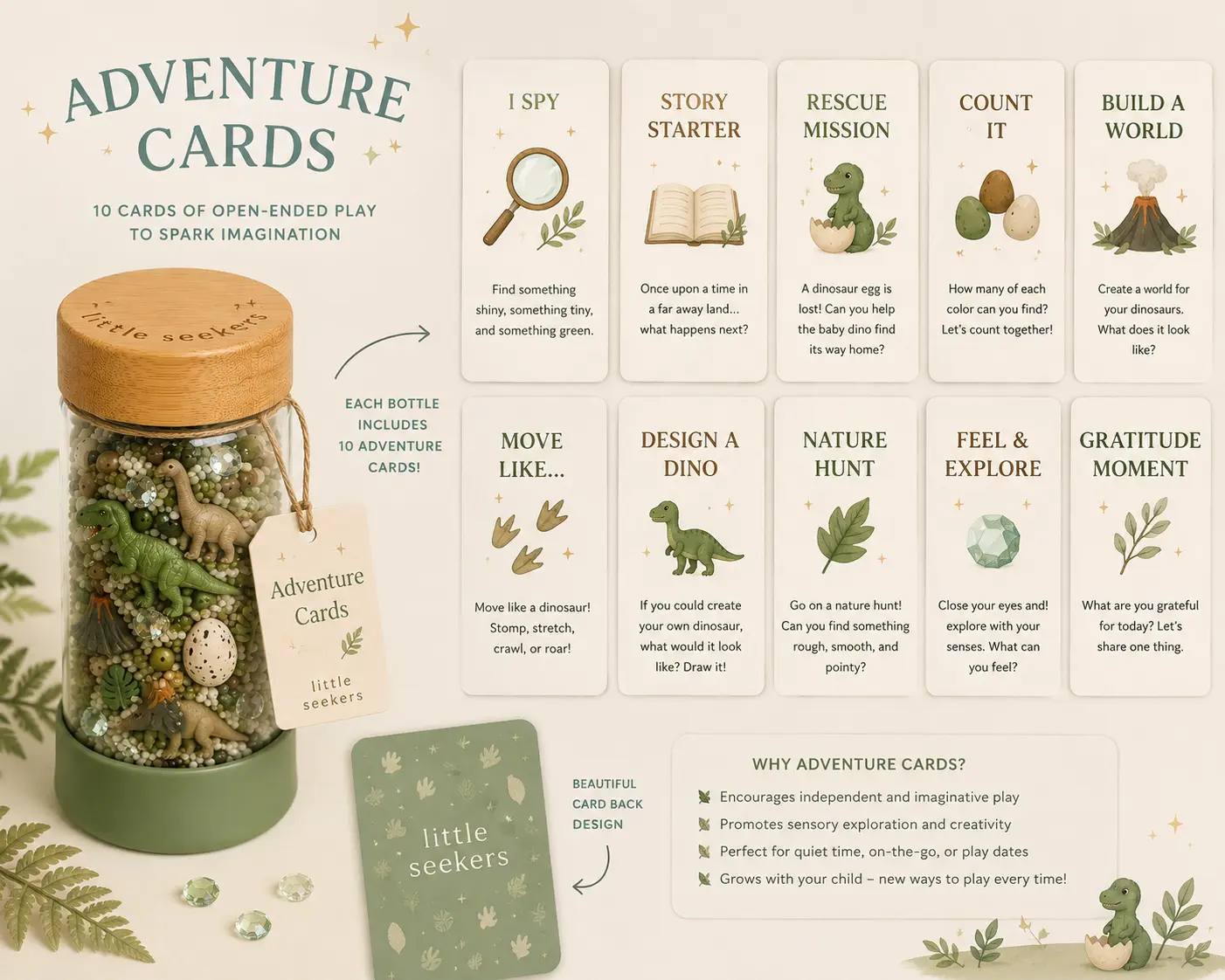
A dry discovery bottle keeps the filler and tiny treasures contained. Ask your child to find one object, count a group, or tell a story about the first item that appears.
2. Make a household texture hunt
Choose a word such as smooth, bumpy, soft, or cool. Walk through one room and find three safe objects that match. This builds descriptive language without setting up a bin.
3. Use water-reveal painting cards
Fill a water pen at the sink and place a small towel under the card. Children still get the cause-and-effect pleasure of painting, but the water dries and the picture can be used again.
4. Build a reusable sticker story
Keep one background and a small sheet of reusable stickers in a zip pouch. Invite your child to make a scene, describe it, then change one detail and continue the story.
5. Play a quiet sound-matching game
Place matching safe objects in opaque containers—for example, two with large pasta pieces and two with bells. Shake one and listen for its match. Keep all containers securely closed and supervise play.
6–9. Add movement without adding clutter
A play scarf, painter’s tape path, animal walk, or simple ‘slow/fast/freeze’ game gives children body-based sensory input with almost nothing to put away.
- Float and catch one lightweight play scarf
- Follow a painter’s tape line across the floor
- Move like a chosen animal from one wall to another
- Take turns calling slow, fast, tiptoe, and freeze
A simple rule for lower-stress sensory play
Choose one material, one boundary, and one invitation. A single contained activity is often more engaging than several choices spread across the room—and much easier to reset when attention moves on.
Every child is different. Choose activities that fit your child’s age and abilities, supervise play, and follow each product’s care and safety guidance.